Ray Holland

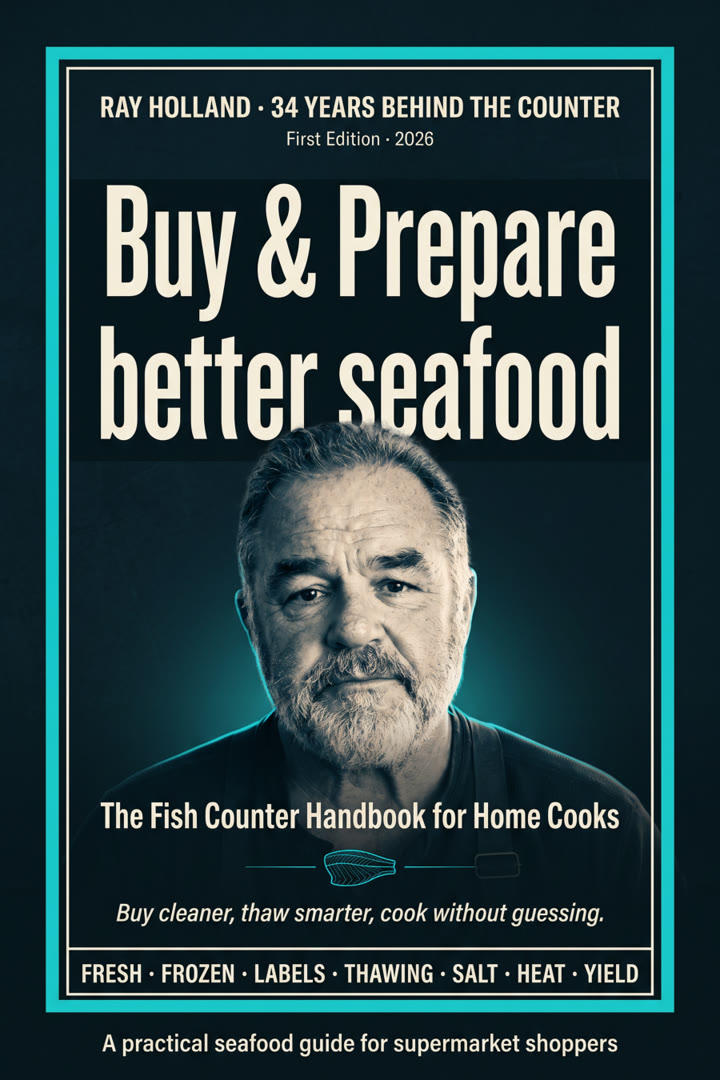
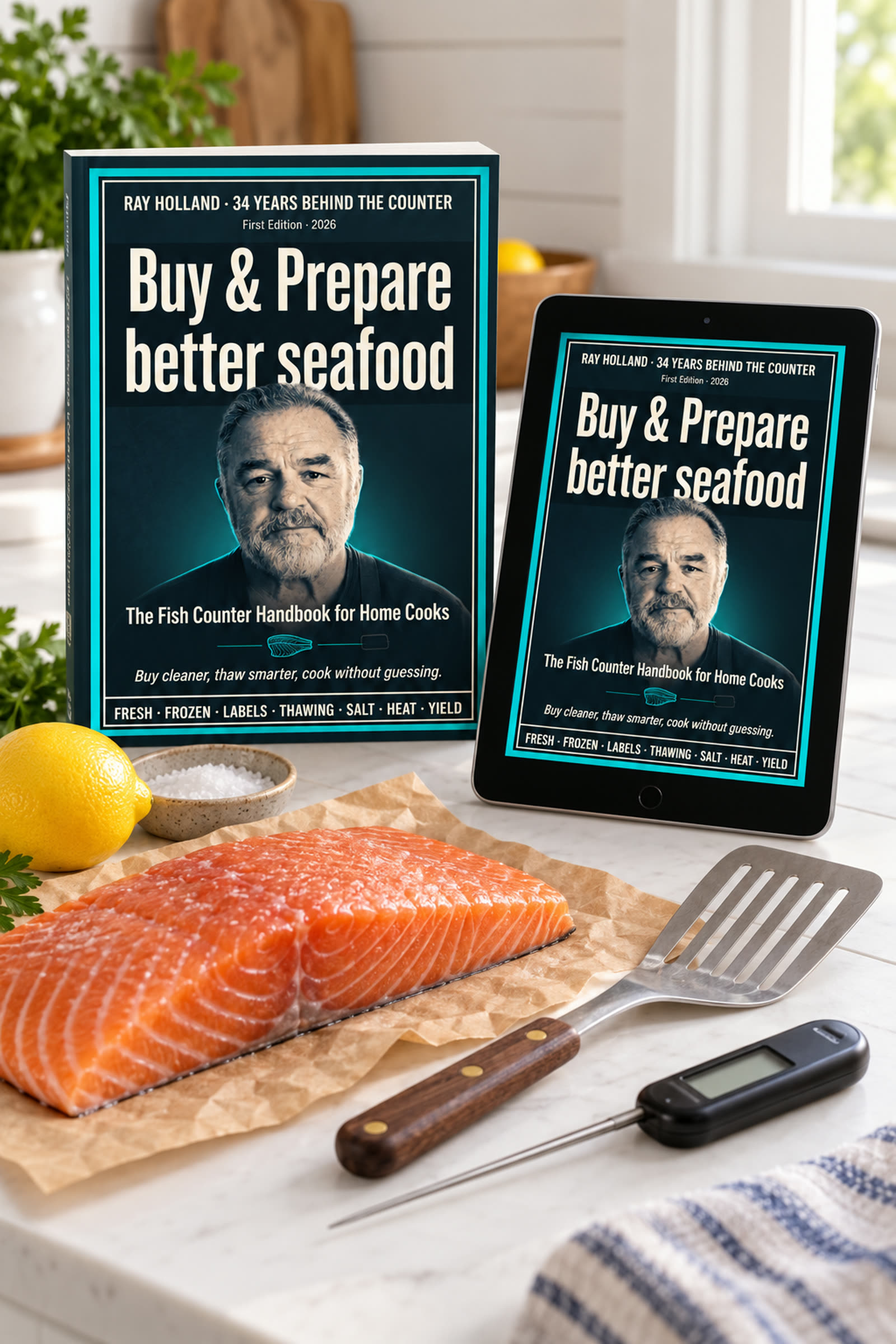
Cover of Buy & Prepare better seafood by Ray Holland

Buy cleaner, thaw smarter, and cook seafood without guessing.

A 147-page fish-counter handbook for home cooks who want the pan to stop being a surprise.

Instant access. Read on any device. 7-day refund if it is not useful.

What is inside

The counter, the label, the thaw, and the pan — treated as one decision.

This is not a recipe parade. It is a working handbook for the moments before the recipe, when you decide what fish is worth buying and what it can honestly do once you get it home.

147pages
22chapters
34years behind fish
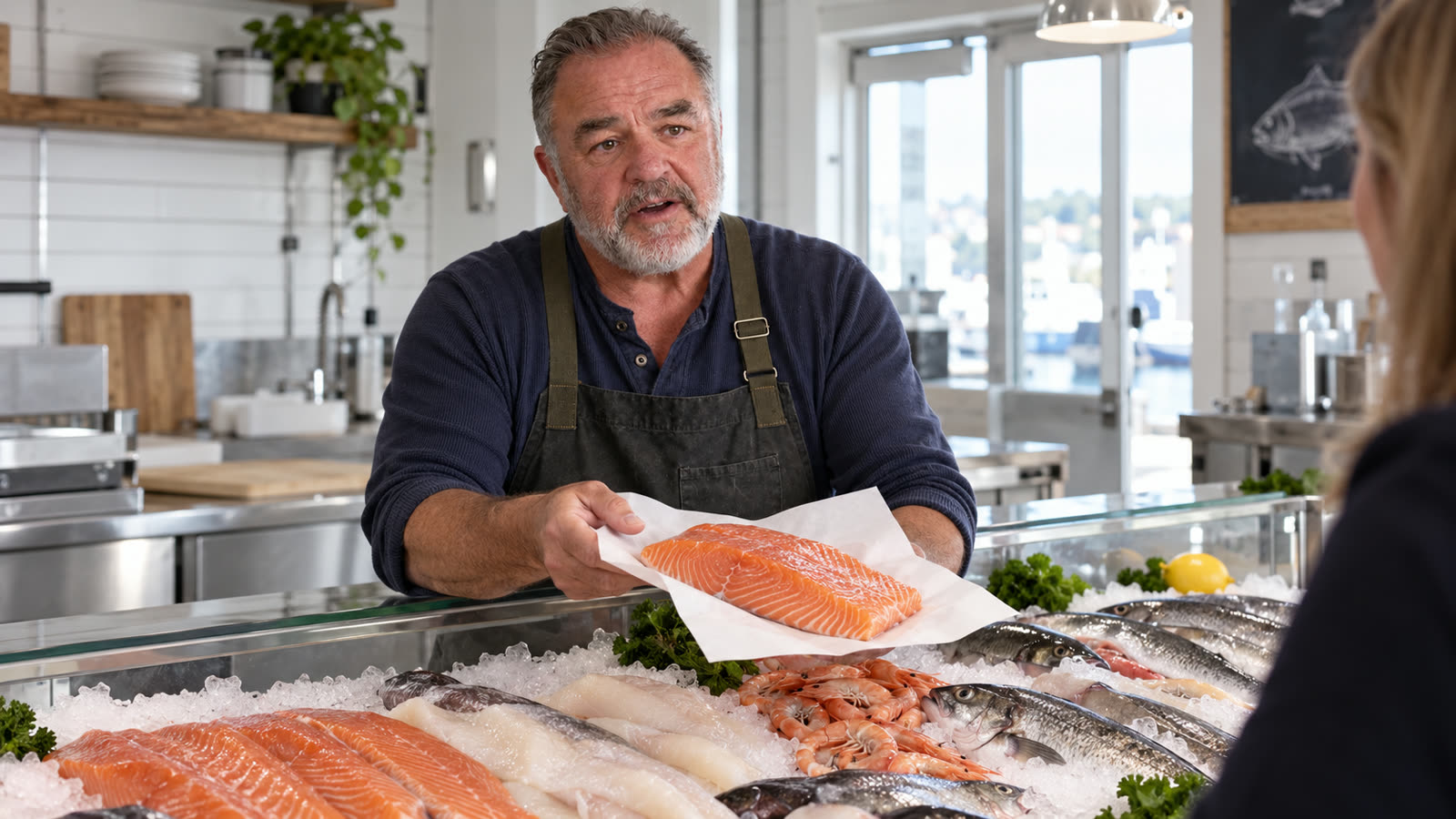
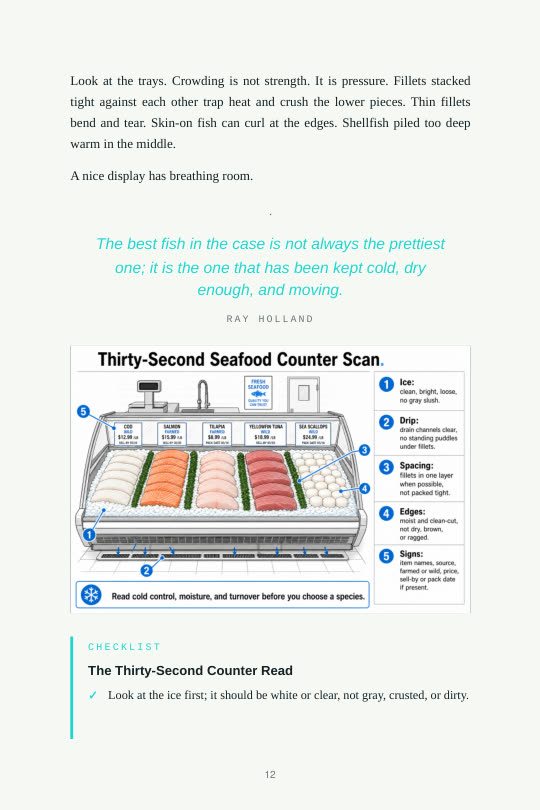
  • Read a seafood display in thirty seconds. Learn what ice, drip, crowding, edges, odor, and turnover tell you before you point.
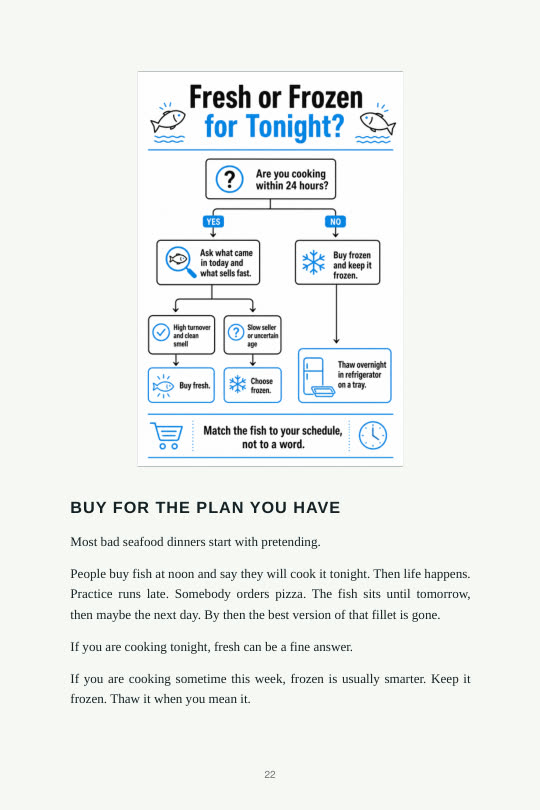
  • Stop treating “fresh” as a magic word. Know when high-turnover frozen beats tired “fresh” fish sitting too long in the case.
  • Understand previously frozen fish. See how freezing history changes moisture, texture, and the cooking method that makes sense.
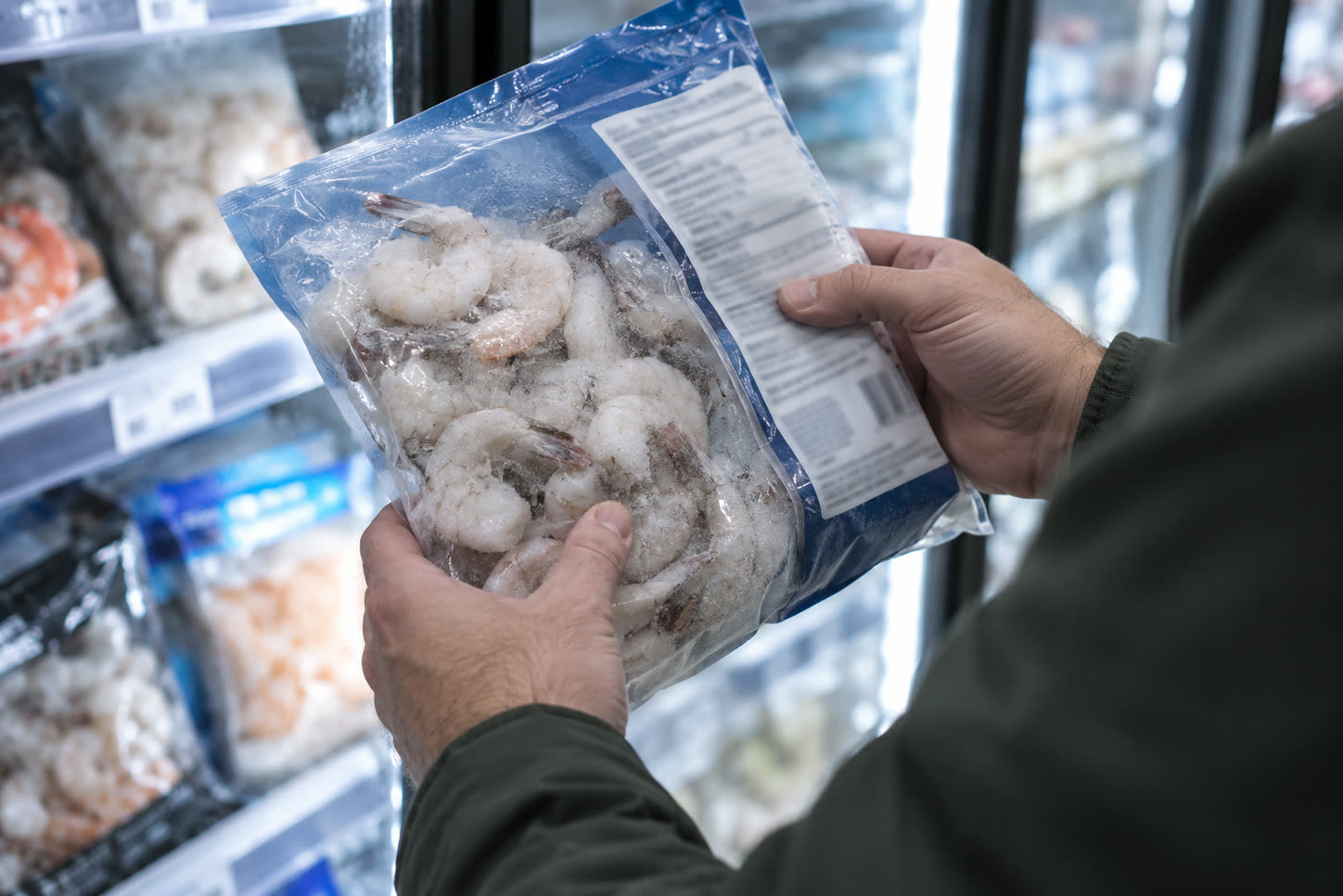
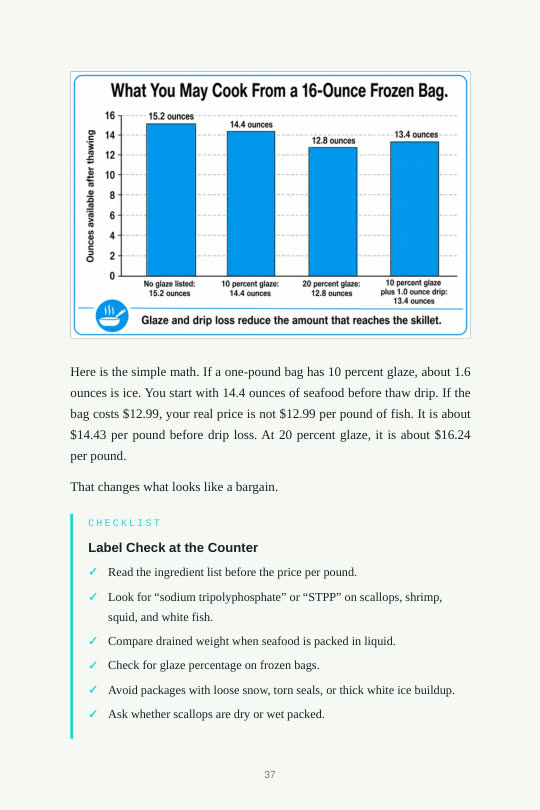
  • Catch labels that change the price. Read net weight, drained weight, glaze, country of origin, ingredient lists, and phosphate treatment.
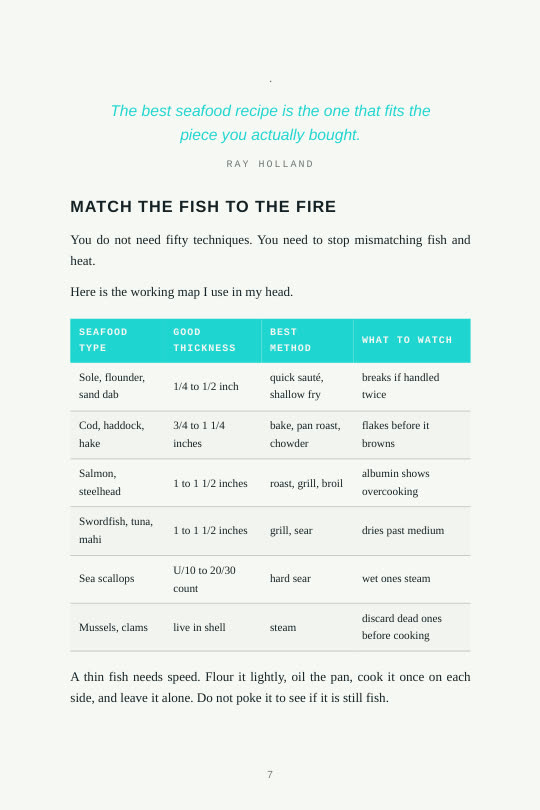
  • Choose fish by the method first. Match fat level, thickness, flake size, skin, and water content to high heat, gentle heat, or no browning.
  • Thaw without damaging dinner. Open vacuum packages before thawing, keep fish out of its drip, and avoid rushed warm-water mistakes.
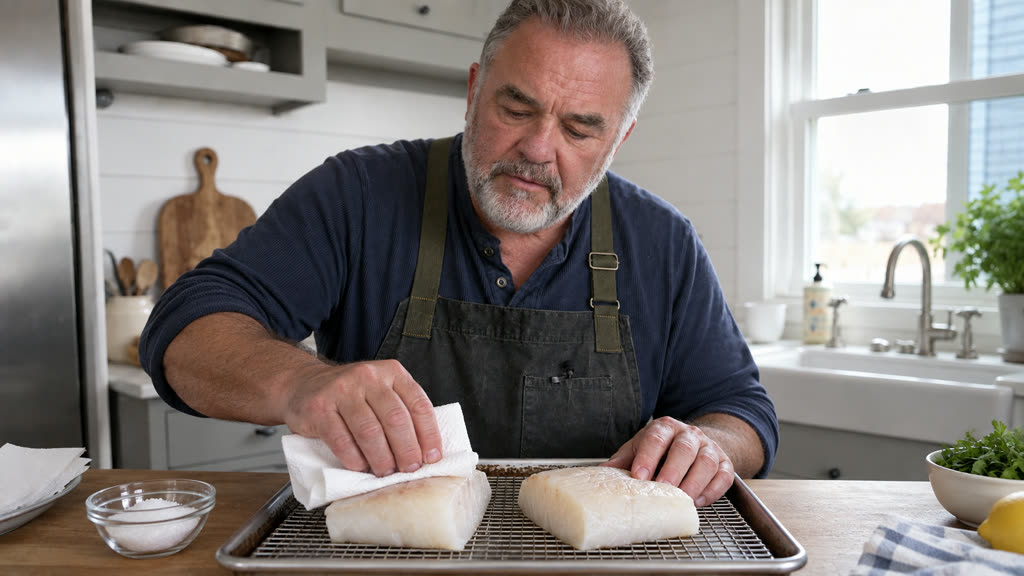
  • Dry fish when browning matters. Use blotting, racks, refrigerator air, and patience so the surface can brown instead of steam.
  • Salt with timing, not habit. Treat thin fillets differently from thick portions and avoid accidentally curing delicate fish.
  • Cut for even cooking. Learn why tapered fillets fail, when to fold or separate tails, and why thickness matters more than weight alone.
  • Cook skin without tearing it up. Understand curling, cold-pan starts, hot-pan starts, and when a fillet is ready to release.
  • Use temperature instead of guesses. Place the thermometer correctly, understand carryover, and know the FDA 145°F safety point for finfish.
  • Make leftovers useful. Cool safely, reheat gently, or repurpose cold fish into salads, cakes, rice bowls, and chowders.
  • Buy whole fish with real math. Think in dressed weight, fillet yield, head-on value, bones, collars, frames, and trim.
  • Build a repeatable counter routine. Choose the method, inspect the fish, read the label, plan the thaw, portion, salt, cook, and store.

The problem

Most seafood failures are purchased before they are cooked.

You can do everything the recipe says and still end up with fish that leaks, tears, sticks, steams, or tastes flat. A wet, thin, treated fillet will not sear like a thick dry portion. A tapered tail cannot cook evenly just because the timer says six minutes. Vacuum-packed frozen fish thawed wrong can bring texture problems to the pan before the burner is even on.

The usual advice starts too late. It talks about heat, butter, lemon, and timing. Those matter. But Ray Holland’s point is simpler and more useful: the fish is already telling you what it can do. You have to read it while you still have choices.

  • A display with tired ice, pooled drip, ragged edges, and slow movement is giving you information about turnover and moisture.
  • A label with glaze, added water, or sodium tripolyphosphate is telling you what you are paying for and why browning may be difficult.
  • A “fresh” sign does not answer whether the fish came in today, was frozen at sea, sells fast, or suits tonight’s cooking plan.
  • A thick center-cut portion and a thin tail piece can weigh the same and cook completely differently.
  • A food-safe internal temperature is not a mood. The book covers the FDA 145°F point for finfish and explains lower restaurant-style temperatures as tradeoffs, not blanket advice.

Proof of the book

Interior page previews.

A finished digital handbook, not a loose collection of tips. The pages are meant to sit on a tablet, phone, laptop, or printed sheet beside the kitchen counter.

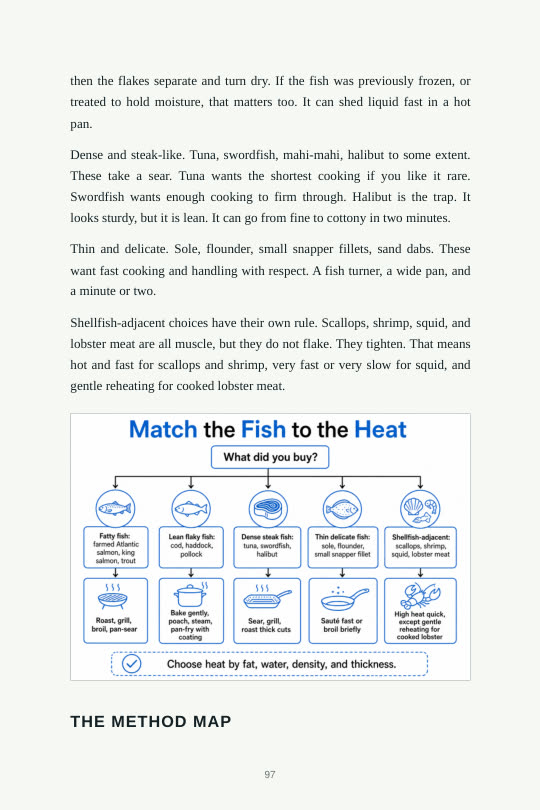
Interior page preview about reading the seafood counter
Counter inspection and buying judgment.
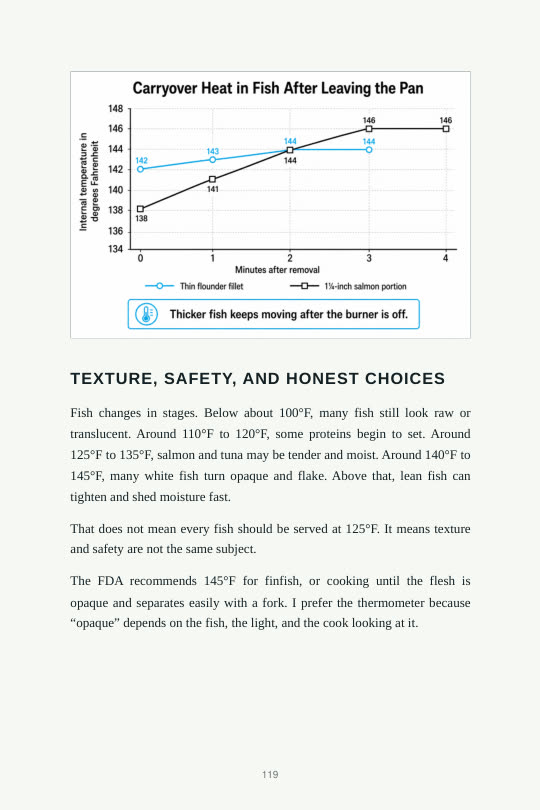
Interior page preview about fresh, frozen, and labels
Fresh, frozen, glaze, and label value.
Interior page preview about thawing, drying, and salting fish
Thawing, drying, salting, and texture.
Interior page preview about cooking by thickness and temperature
Thickness, heat, skin, temperature, and leftovers.
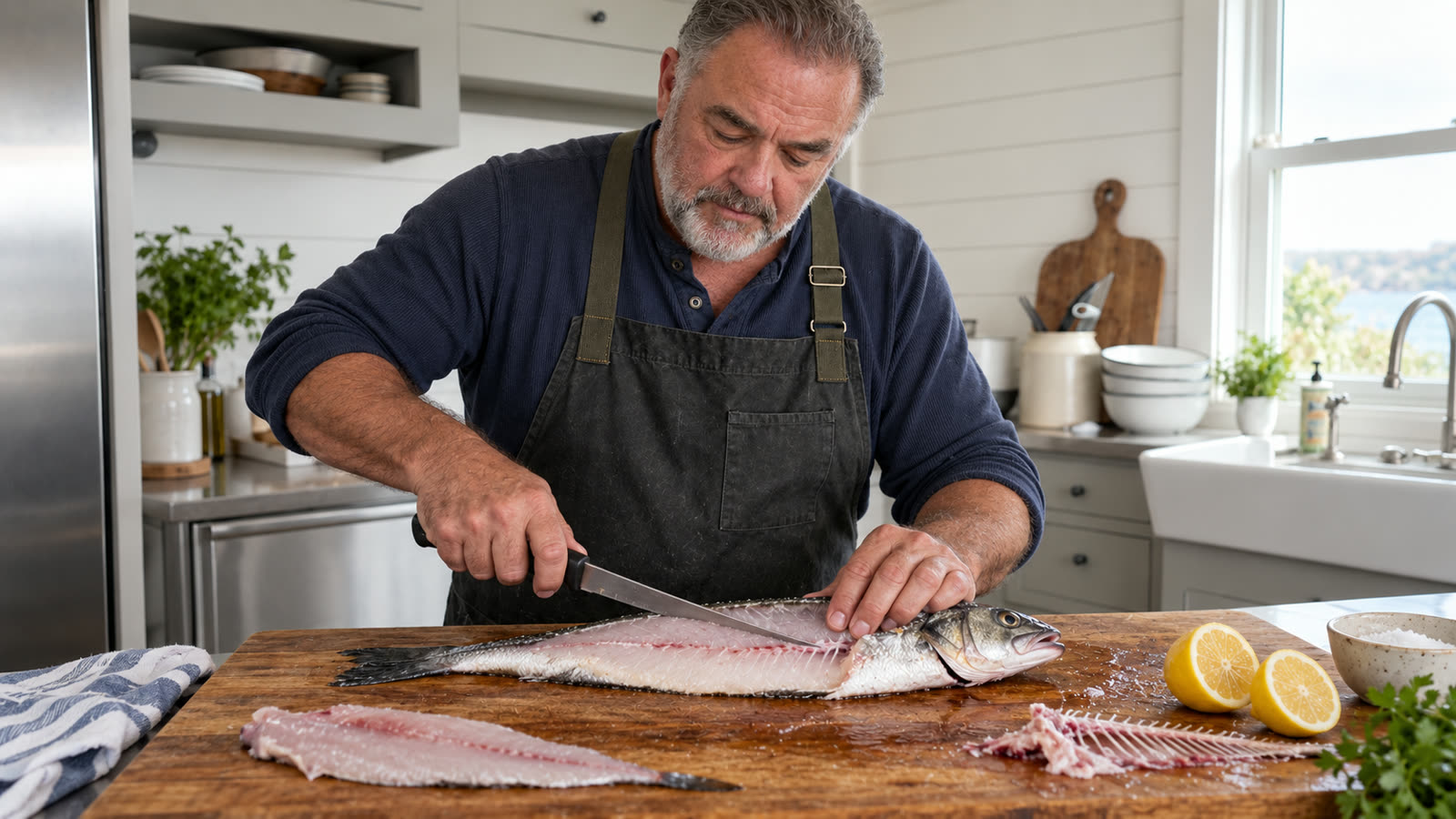
Portrait of Ray Holland

About the author

Ray Holland cuts fish for a living.

Thirty-four years behind a counter, and before that, on the cutting table at a fish house in New Bedford, Massachusetts.

In Ray’s words

Not a celebrity-chef voice. A counter voice.

I cut fish for a living. Thirty-four years behind a counter, and before that I started on the cutting table at a fish house in New Bedford, Massachusetts, which is the highest grossing fishing port in the United States and has been for most of my working life.

I have filleted more fish than I could put a number to. My left thumb has a scar across the pad of it that I got in nineteen ninety-four, and I can still tell you exactly what I was cutting. My hands smell like the ocean no matter what I wash them with. My wife stopped mentioning it around year six.

This handbook comes from the questions people ask at the case, the fish they bring back, the labels they do not notice, and the dinners that go sideways for reasons that started long before the pan.

Introducing the book

Buy & Prepare better seafood

The Fish Counter Handbook for Home Cooks is a plain, practical 147-page PDF about buying cleaner, thawing smarter, and cooking seafood without guessing.

It exists because seafood is expensive, delicate, and often misunderstood. A home cook can spend good money on salmon, cod, haddock, halibut, tuna, swordfish, trout, sole, snapper, shellfish-adjacent choices, cans, pouches, or a whole fish — and still be left guessing what happened.

The book ties the whole route together. Counter inspection affects buying. Buying affects thawing. Thawing affects surface moisture. Surface moisture affects browning. Thickness affects temperature. Storage affects tomorrow’s leftovers. None of these steps sit alone.

Who this is for

  • Home cooks who buy at a seafood counter, freezer case, grocery case, warehouse club, or market.
  • People who want better weeknight fish without learning restaurant plating.
  • Anyone tired of paying premium prices and then watching fish leak water in the pan.
  • Cooks who want clear questions to ask, not vague advice to “buy the freshest fish.”

Who it is not for

  • Anyone looking for raw-bar showmanship or restaurant technique.
  • Anyone wanting tricks to make poor fish seem good.
  • Anyone who wants a glossy seafood cookbook instead of a working handbook.

The offer

Everything included in the first edition.

The purchase is deliberately simple: one finished PDF, immediate access, lifetime updates to this edition, and a short refund window if it does not earn its place on your counter.

Included What it helps you do
147-page PDF Read on a phone, tablet, laptop, or print pages for kitchen use.
22 practical chapters Follow the full route from counter inspection to next-day leftovers.
Buying frameworks Judge fish by turnover, fat, thickness, water content, skin, and treatment.
Label and value guidance Understand glaze, drained weight, country of origin, ingredients, and phosphate treatment.
Preparation routines Thaw, dry, salt, portion, cook, cool, and reheat with fewer surprises.
Lifetime updates Future updates to this edition are included at no extra cost.
7-day
refund

The guarantee

Usefulness is the standard.

If the handbook does not help you buy, thaw, prepare, or cook seafood with more confidence, ask for a refund within 7 days. No elaborate case is required. The book is meant to be practical. If it is not practical for you, you should not have to keep it.

You also receive lifetime updates to this edition, so improvements and corrections do not ask you to buy the same handbook twice.

FAQ

Plain answers before you buy.

Is this a cookbook?

No. It is a fish-counter and preparation handbook. It teaches buying judgment, thawing, drying, salting, portioning, heat choice, temperature, storage, and leftovers. It is meant to make the recipes you already use work better.

Will this help if I mostly buy frozen fish?

Yes. Frozen and previously frozen fish are central to the book. It explains thawing, vacuum-package handling, glaze, moisture, texture changes, and when high-turnover frozen can be the better buy.

Does it cover food safety?

Yes, in practical terms. It covers mercury guidance, parasite risk, freezing parameters, refrigerator storage, safe cooling, and the FDA safe internal temperature of 145°F for finfish. It does not pretend that lower restaurant-style temperatures carry no tradeoff.

I do not have a fancy fish market. Is it still useful?

Yes. The book is written for people buying at grocery counters, freezer cases, cans, pouches, warehouse clubs, and ordinary markets. It is not built around having perfect access. It is about reading what is in front of you.

Can I print it?

Yes. You get a PDF. You can read it digitally or print the pages you want near the counter or stove.

What happens after I buy?

You get instant PDF access through the checkout system. Updates to this edition are included for life, and you have a 7-day refund window if the book is not useful to you.

Before the next fish dinner

Make the purchase at the counter, not in the pan.

One handbook. Twenty-two chapters. A calmer way to buy, thaw, cut, salt, cook, and store seafood — from a man who has spent a working life behind fish.

Instant PDF access. Lifetime updates to this edition. 7-day refund.